
BY STEPHEN KUHRT
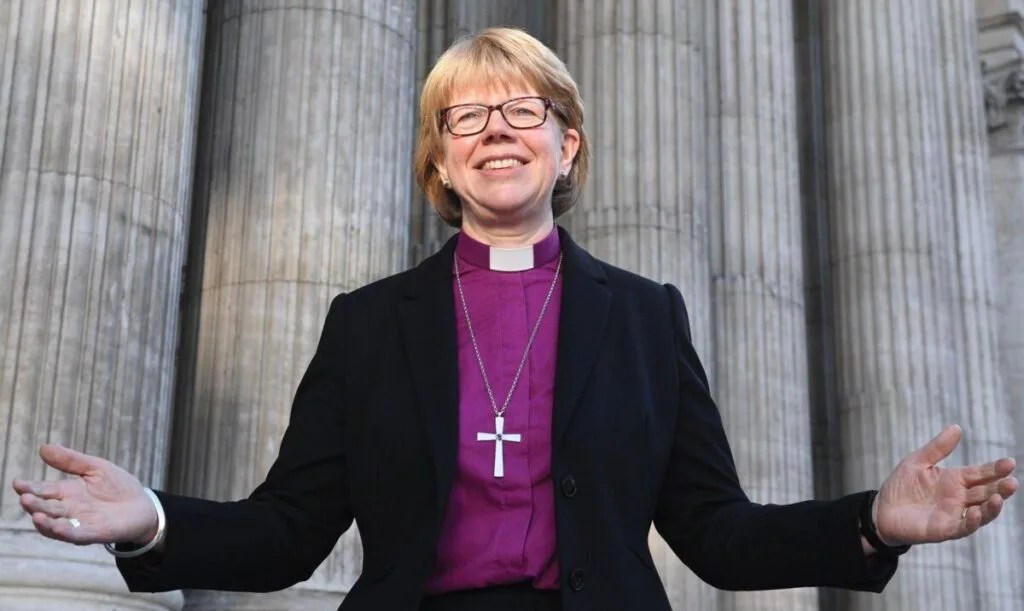
Dear Bishop Sarah,
Congratulations on your nomination to be the next Archbishop of Canterbury. The fact that you are a woman, educated at a comprehensive school and a polytechnic, worked as a cancer nurse and trained for ordination on a non-residentiary course are, for me, undiluted positives. More crucially, they can all play a vital role in what, to my mind, is the most urgent task that awaits you: challenging and attempting to change the culture of the Church of England.
You will doubtless be inundated with correspondence about what many regard as the only important issue in the Church – same-sex relationships. I will let those who regard this as ‘the only game in town’ get on with that and restrict myself to the much greater issue that the obsession with sexuality (important though that subject may be) has helped to hide and indeed make worse.
This issue is the priority currently given to preserving the institution of the Church of England and ‘keeping the show on the road’. This instinct has had many terrible effects upon ministry and mission within the Church of England. But, of course, by far the worst has been its catastrophic impact upon its safeguarding. I hope you are already aware that at the root of every suppression of safeguarding cases within the Church of England (without exception) has been a misplaced priority on preserving the ‘safety’ of the institution. But even this explanation needs greater scrutiny. Those who have failed to deal properly with safeguarding cases in the church have not done this out of a laudable but misguided attempt to preserve its mission and ministry. It is much worse than that. They have done it to preserve their vested interest in the church.
You must be aware already that the Church of England can be incredibly ‘cosy’. Those who have found their jobs in the outside world difficult and demanding can very easily escape this through getting ordained. The challenges of ordained ministry can, of course, be considerable. Indeed, this should be the case, if it is pursued in the right way. What is less recognised, however, is the way this ‘vocation’ so easily enables countless people to receive a regular income, a nice house, status in the local community and, crucially, a job that is often entirely unaccountable in terms of performance. Parish clergy, as you will doubtless know, can be utterly ineffective – and with no one calling them to account for this. In fact – particularly if the result of this tolerance is that they are supportive of their bishop and the institution that has provided this refuge – such blandness can be more than tacitly encouraged by those in senior positions.
The same is true within diocesan structures and even more in the well-paid ‘men (and women) in grey suits’ who work at Lambeth Palace. From the numerous ‘Captain Darling’ figures who dominate diocesan positions to the ‘Sir Humphrey Appleby’ figures at Lambeth Palace (like you I was a teenager in the 1980s, hence these illustrations), these places are dominated by those invested in the preservation of the institution of the church rather than the energetic pursuit of what it is here to do.
And, to repeat, the results of all of this for the safeguarding of vulnerable people in the care of the church has been catastrophic. When the overriding aim is to keep ‘the show on the road’, those equally invested in its status quo (even when their agenda is appallingly predatory) will always be treated better than those undermining this through crying out for justice or whistleblowing about abuse within the church. The tendency will always be to downplay, hide or deflect from any scandals that might destabilise the comfortable ‘resting place’ that the Church of England has been allowed to become.
Please resist this culture, Bishop Sarah. The greatest encouragement that you might be able to do this was the stony face you displayed while Justin Welby was delivering his terrible ‘valedictory speech’ in the House of Lords. As great a priority now is to respond similarly to the equally tone-deaf comments made by the Bishop of Dover, Rose Hudson-Wilkin to Channel 4 on the day your nomination was announced. Her rebuke of the media (the major reason we know about the abuse of Peter Ball, George Rideout, Colin Pritchard, John Smyth, Jonathan Fletcher, Mike Pilavachi and David Tudor) for questioning safeguarding in the Church of England was extraordinary but the instruction that followed for survivors of abuse to do likewise and simply trust you as the incoming Archbishop of Canterbury was appalling. The insensitivity and crassness of your future suffragan bishop in Canterbury Diocese, however, can still become positive if it brings home the challenge you now face.
The task is enormous but the best thing that can happen over the next seven years is that you leave the culture of the Church of England in a very different place from how you now find it. As I finish some practical suggestions…
(1) Abandon the dress of previous Archbishops of Canterbury at your consecration and thereafter. This ‘get up’ is far more recent than many realise (Edward King was the first bishop since the Reformation to wear a mitre in 1885 and Cosmo Lang the first archbishop in 1929). Visual statements are important, and this would demonstrate really powerfully that you intend to change the church’s pompous and insecure mindset with all the disastrous fall-out that has resulted from this.
(2) Ask those bishops who have mishandled safeguarding cases to be completely open about this and immediately resign. This should start with the Archbishop of York, Stephen Cottrell for his mishandling of the case of David Tudor, while Bishop of Chelmsford. Encourage them to go back to parish posts and ‘work out their salvation with fear and trembling’ (Philippians 2.12). Perhaps use John Profumo as an example of the redemption that can come when disgraced highflyers have the courage to do this (in your new position of influence, you could suggest something similar, via King Charles, to Prince Andrew…).
(3) Work towards a clear-out of the staff at Lambeth Palace. Those who have advocated for survivors of abuse within the Church of England regard these influential but little-known people (William Nye needs particular mention) as the biggest problem in this regard because of their largely invisible role in acting as custodians of the culture.
It’s a tough job but, by God’s grace, not an impossible one. As Oliver Cromwell is alleged to have said, ‘trust in God and keep your powder dry’ – in this case, particularly from ‘the leaven’ of the House of Bishops and the officials at Lambeth Palace (cf Matthew 16.6).
Best wishes
Stephen Kuhrt
Vicar of the Parish of New Malden and Coombe in Southwark Diocese
P.S. I enclose a copy of my recently published book: Safeguarding the Institution: How the Culture of the Church of England facilitates abuse
Discover more from Safeguarding the Institution
Subscribe to get the latest posts sent to your email.

 Safeguarding the Institution