
BY STEPHEN KUHRT
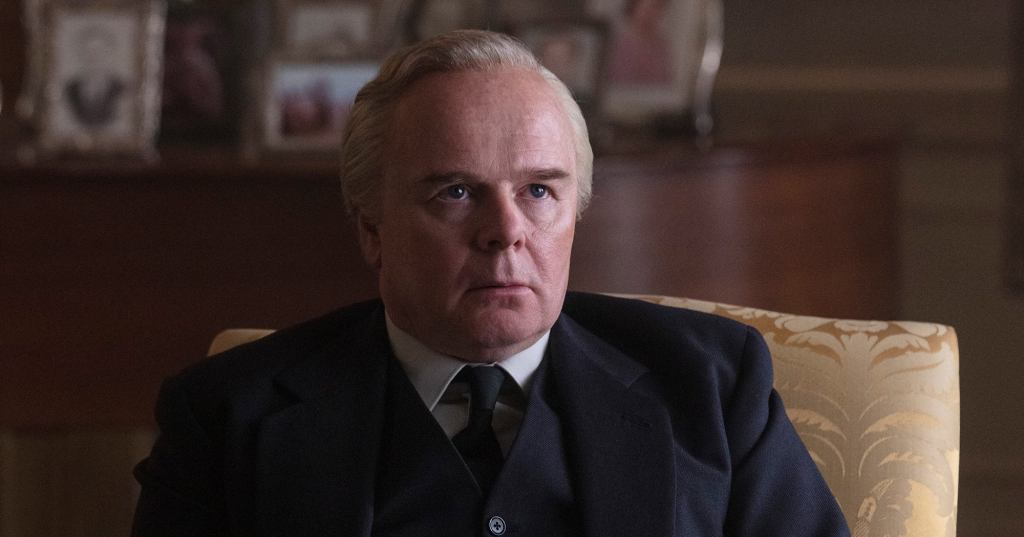
Like many people, I was a fan of The Crown – the six season drama on Netflix exploring the reign of Queen Elizabeth II. The series sought to fill the gaps in what we know about this, chiefly through the imaginary private scenes involving the royals that it presented. These were open to criticism (and regularly received it) for presenting fiction as fact. But like all historical fiction, the best of these reconstructions prompted deeper reflection on the issues involved in the episodes they covered.
Disaster at Aberfan
A scene I enjoyed most was in Season 3 where Harold Wilson, Prime Minister from 1964-70 and 1974-76 (played by Jason Watkins) talked with the Queen (played by Olivia Coleman) after the disaster at Aberfan. In October 1966, a colliery spoil tip collapsed and slid down a mountainside in South Wales, burying a junior school and killing 144 people, mainly children.
In the scene, the Queen expressed her inadequacy at not being able to make the emotional response to the disaster shown by others. Wilson’s reply was equally honest…
‘These meetings are confidential, yes? I have never done a day’s manual work in my life… not one. I’m an academic, a privileged Oxford don, not a worker. I don’t like beer, I prefer brandy. I prefer wild salmon to tinned salmon, chateaubriand to steak-and-kidney pie. And I don’t like pipe smoking; I far prefer cigars. But cigars are a symbol of capitalist privilege. So, I smoke a pipe on the campaign trail and on television. Makes me more approachable, likeable. We can’t be everything to everyone and still be true to ourselves. We do what we have to do as leaders, that’s our job. Our job is to calm more crises than we create. That’s our job and you do it very well. And in a way your absence of emotion is a blessing. No one needs hysteria from a head of state.. the truth is, we barely need humanity.’
The scene was fictional but nonetheless moving. It was a fascinating exploration of the vulnerabilities in both figures and offered an intriguing insight into their famously close relationship. But the line that jumped out at me most was when the Prime Minister said, ‘Our job is to calm more crises than we create.’
Smoothing things over when conflict occurs
The statement made an impact because it summed up the ethos that I have encountered so often as a clergyman within the Church of England – particularly in its bishops and archdeacons. Many in such positions quite consciously regard their primary job as to be as urbane and pleasant as possible, ‘smoothing things over’ when conflict occurs and thus ‘keeping the show on the road’. I remember hearing a senior church leader saying to me some time ago that the growing consensus in the Church of England was that ‘a safe pair of hands’ was now seen as the type of appointment least likely to lead to disaster.
There is clearly something in this. A charismatic and dynamic approach to leadership carries significant dangers. But so does the opposite. In fact, the safeguarding disasters that have occurred within the Church of England in recent years have usually seen their combination. Charismatic and dynamic leaders have generally committed the abuse, with the risk-averse and institutionalised leaders above them, failing to respond appropriately to this. The reason for the latter is not hard to find when those involved are so used to trying to contain crises rather than deal with them. Attempt to bore down into any difficult issue and it brings the risk of the crisis escalating – ‘opening a can of worms’ and then having more to deal with. Much better, if you can, to quietly neutralise the threat, even if this involves leaving the root causes of the problem intact.
Managing crises rather than resolving them
Sadly, we are now realising the extent to which the Queen (the real one) did this with her second son. The infamous payment (allegedly of £12,000,000) to Virginia Giuffre was just part of this. Andrew Lownie has drawn attention to the way in which the Queen, for a long time, would respond to any difficult issues put to her about Andrew’s conduct by giving him fresh honours and appearing in public beside him. Elizabeth II had an earnest and genuine Christian faith and clearly loved her family. She also possessed a deep sense of duty. Unfortunately, she interpreted much of this duty as to do with managing and calming crises rather than resolving them. This went beyond the former Prince Andrew. In another book, Andrew Lownie has revealed that Lord Louis Mountbatten – the Queen’s second cousin and great-uncle to the current King – was a prolific paedophile. Given Mountbatten’s profile and influence, it is difficult to believe that both the Queen and then Prince Charles (thirty years old when his acknowledged mentor died) were oblivious to this. If they were aware of Mountbatten’s conduct, then – especially in the case of the Queen – the agenda of calming rather than creating any crisis through acting in regard to this abuse – appears to have won out.
But this goes to the heart of the problem. If people in leadership are committed to calming crises within the institution they lead, they will always side with the powerful over those who are vulnerable. It won’t occur to them that they are letting down the very people for whom their institution is meant to exist. The way that Peter Morgan, writer of Wilson’s speech in The Crown, chose to end it is significant. Once again the line ‘we barely need humanity’ should not be taken too literally. But it nonetheless points to what happens when the cause of protecting an institution becomes all important. Humanity on the part of its leaders quickly recedes – and, as a result, those humans paying the price for this agenda become completely expendable.
Action from the wrong place
Even in the current climate, this ideology is not receiving the critique that it should. It is shown in the media’s interpretation of the King’s recent actions over his brother. While suggesting that it should have happened earlier, commentators have praised the eventual speed with which King Charles acted ‘to protect the Crown’. Even the mention of the King’s expressed concern for the victims/survivors of abuse in his statement, has been presented as necessary in order to calm the crisis currently facing the monarchy.
But all of this springs from the wrong place. An agenda that seeks to ‘calm more crises than we create’ only allows a response to unpleasant issues when they bring the institution itself into threat. It is this ideology and the culture that supports it that is responsible, more than anything else, for the terrible safeguarding record of virtually all of our country’s institutions. This is because, whether it is the Royal Family, the BBC, the NHS, the Metropolitan Police or the Church of England, this ethos has led to the most appalling indifference to those whose well-being has been sacrificed for the sake of these institutions. And ironically, it has not even fulfilled this purpose. In the end, truth always prevails with these institutions eventually exposed for their weakness and wickedness – and left much weaker as a result.
Losing your life to save it
The only answer is the firm rejection of this ideology. When Jesus spoke to those tempted to put self-preservation first, he challenged this by saying…
‘If anyone would come after me, he must deny himself, take up his cross and follow me. For whoever wants to save his life will lose it, but whoever loses his life for me and the gospel will save it’ (Mark 8.34-5).
The implications of such an agenda couldn’t be more different from seeking to ‘calm more crises than we create’. The resulting approach won’t be ‘gung-ho’ and ill-considered. But it will always be prepared to challenge and expose things that are wrong. And show courage – particularly when such actions will place the things that we cherish in jeopardy. Such jeopardy may indeed happen in the short-term and escalate the element of crisis – especially for the one acting (or whistleblowing) in regard to it and seemingly ‘letting the side down’.
The salvation of people and institutions
However – if Jesus is right – such courageous actions are the only path to the salvation of both people and organisations. Follow the agenda of seeking to save an institution – be it the Royal Family, the BBC or the Church of England – and it will only result in the loss of their ‘souls’ and eventually their entire existence. Be prepared, on the other hand, to lose these institutions – in the most obvious case, through exposing their safeguarding failures and doing the right thing in response to these scandals – and, paradoxically, this is the only thing that can save them.
Discover more from Safeguarding the Institution
Subscribe to get the latest posts sent to your email.

 Safeguarding the Institution
I know Stephen Kuhrt and I greatly admire him for his relentless energy in trying to persuade the Church of England hierarchy to act justly in relation to leaders, at local and national level,who have used their power to abuse other people, children and teenagers in particular.
I think without doubt he has produced evidence, and will no doubt produce more in the future, of the inertia which is endemic to many institutions, when members of their own hierarchy are guilty of wrongdoing.
Will the Church of England collapse because it has followed the pattern of self-protection which other institutions such as the monarchy have followed? The first instinct, in the face of a high profile allegation against a member of the hierarchy in the Church of England, has been, to date, one of ‘looking after’ the situation so that external perceptions of the church remain intact. In reality it has had the opposite effect. Stephen’s concluding paragraph says this:
However – if Jesus is right – such courageous actions are the only path to the salvation of both people and organisations. Follow the agenda of seeking to save an institution – be it the Royal Family, the BBC or the Church of England – and it will only result in the loss of their ‘souls’ and eventually their entire existence. Be prepared, on the other hand, to lose these institutions – in the most obvious case, through exposing their safeguarding failures and doing the right thing in response to these scandals – and, paradoxically, this is the only thing that can save them.
Unfortunately, in this broken world, institutions do not fall to the ground because of wrongdoing – the calculation is made that there are enough sheep that will be happy to follow the party line rather than challenge it. If you have ever worked in an organisation where people have been unfairly judged, overlooked for promotion, or asked to conceal the truth then you will know exactly what Stephen is talking about.
The Church of England does not look as if it is about to collapse. The danger is that it has already become a self-protecting and inward-looking institution – there is nothing to mark it out and so the church’s witness is damaged despite all the good which is there at local level. However there is still an opportunity which the recent media driven ‘crises’ has produced.
The Church of England could set up and fund a helpline for anyone alleging harassment or abuse – it could be run by independent professionals who would have the discretion to refer cases on to the Police and Social Services as well as liaise with the relevant diocese and church- the fact of its independence from the structure of the Church of England would hopefully demonstrate some measure of commitment to victims compared to the in house ‘management’ which to date has simply made them feel that the church is protecting its own.
Regrettably, this is exactly what has been happening.
Nathan Driscoll
LikeLike