
BY STEPHEN KUHRT
An unsettling echo
There is an unsettling echo between the current controversy surrounding Jason Arday and one of the great political scandals of modern European history: the Dreyfus Affair in nineteenth-century France. The comparison must be handled carefully. The two cases are not morally or historically equivalent. Alfred Dreyfus was an innocent man falsely convicted of treason and imprisoned because of a poisonous combination of institutional failure and antisemitism. The questions raised about Arday’s academic work are of a different nature. Yet the parallels are worth considering because both episodes show what happens when an individual becomes a symbol in a wider struggle over race, national identity, institutions and belonging.
The Dreyfus Affair
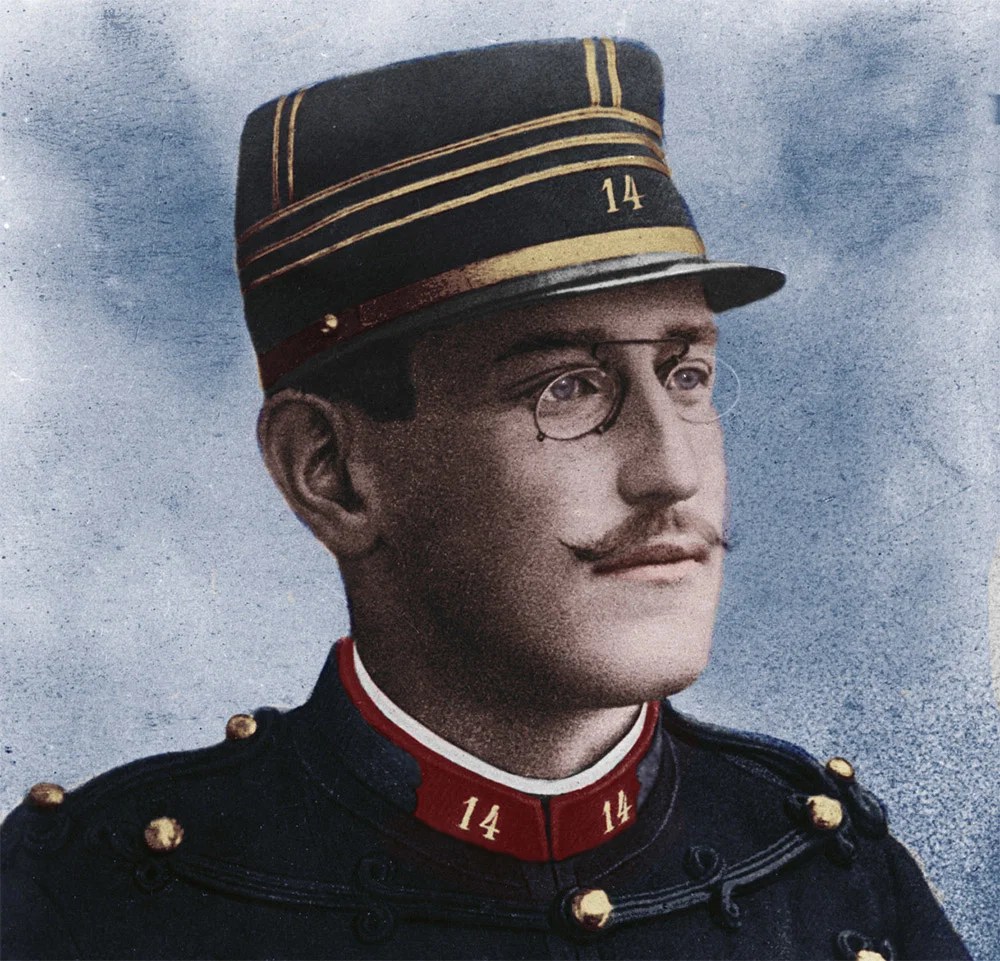
The Dreyfus Affair began in 1894. Alfred Dreyfus, a Jewish captain in the French army, was accused of passing military secrets to Germany. He was convicted by a military court on the basis of deeply flawed evidence, including material secretly withheld from his defence, and sent to the penal colony on Devil’s Island. It later became clear that another officer, Ferdinand Esterhazy, was responsible. Yet sections of the army and political establishment resisted reopening the case, while an aggressively antisemitic press portrayed Dreyfus as a representative of a supposedly disloyal Jewish minority.
The affair eventually split France. Those who defended Dreyfus became known as Dreyfusards; their opponents, the anti-Dreyfusards. Émile Zola’s famous 1898 article, J’accuse, transformed the affair into a national crisis. At stake was no longer simply the guilt or innocence of one army officer, but competing visions of France: would loyalty to institutions and tribe outweigh evidence and justice? France’s highest court eventually overturned Dreyfus’ conviction and declared him innocent in 1906.
The Arday controversy has a similarly symbolic quality, though the underlying facts are radically different. Jason Arday, a sociologist appointed as Cambridge’s youngest black professor in 2023, became a highly visible emblem of diversity and social progress. In 2026, allegations concerning plagiarism and discrepancies in aspects of his biography led to intense scrutiny, his resignation and a much wider argument about standards, diversity and racism. Following his death in August, the argument has become still more charged, with critics of the media coverage alleging racialised harassment, while others insist that legitimate questions about academic standards must not be dismissed as racism.
When the individual disappears behind the symbol
This is where the parallel with Dreyfus becomes illuminating. In both cases, the individual can disappear behind the symbol.
For some, Arday represents the alleged corruption of merit by diversity politics. For others, he represents the continuing vulnerability of black people who enter elite institutions. His particular circumstances can then become evidence for a much larger argument about ‘wokeness’, racism or the legitimacy of diversity initiatives. The danger is that once someone becomes a tribal symbol, people begin interpreting every fact according to the side they have already chosen.
Race makes this especially complicated. The Dreyfus Affair was fuelled by an explicit racialised antisemitism that treated Jews as fundamentally alien to France, despite Dreyfus being a French citizen and soldier. Contemporary Britain is obviously very different. But race can still become a lens through which individuals are either exalted or condemned. A black academic may be viewed primarily as evidence of institutional progress, or primarily as evidence that diversity has displaced merit. Neither approach allows a person to remain simply a person.
Dividing the world into ‘our people’ and ‘your people’
This is the deeper challenge of tribalism. Once we divide the world into ‘our people’ and ‘their people’, facts become weapons. We become reluctant to acknowledge wrongdoing on our own side and reluctant to recognise injustice committed against the other. We can even convince ourselves that defending truth requires defending our tribe.
For Christians, that should be a warning. Christianity refuses the comforting idea that righteousness belongs exclusively to our political camp. Scripture repeatedly commands believers to reject partiality, to speak truthfully, to defend the vulnerable and to judge matters justly. ‘You shall not be partial to the poor or defer to the great’ (Leviticus 19.15) is a remarkably demanding principle. So is Jesus’ insistence in the Parable of the Good Samaritan that our neighbour is not merely someone from our own group (Luke 10.25-37).
The lesson of both Dreyfus and Arday is therefore not that one side of today’s culture war is simply right. It is that culture wars can tempt us to stop seeking truth altogether. We should be capable of saying that racism is evil and that academic standards matter; that diversity is valuable and that institutions must scrutinise appointments rigorously; that journalists have a duty to investigate and that public humiliation can become deeply cruel and inhumane.
What is true, what is just and how should we treat our neighbour?
Truth does not need a tribe to protect it. Indeed, one of the Christian’s distinctive contributions to a tribal age may be the willingness to pursue truth even when it embarrasses our friends. The challenge is not merely to decide whether Arday is a hero or a villain, nor whether Cambridge or the press is the greater culprit. It is to resist the temptation to make another human being carry the weight of a cultural battle that is much larger than himself.
That may be the most enduring lesson of the Dreyfus Affair: justice begins when we stop asking, ‘Whose side is he on?’ and start asking, ‘What is true, what is just, and how should we treat our neighbour?’
Safeguarding Beyond the Symbol
There is also a safeguarding lesson here. Effective safeguarding requires a willingness to see the person before the symbol. Whether the concern is abuse, bullying, discrimination, professional misconduct or institutional failure, people are less likely to be protected when their experiences become subordinate to the prevailing institutional or cultural ideology.
It is important to recognise that the tribal pressures identified above can operate from both directions. An institution anxious to demonstrate its commitment to diversity may become defensive when concerns are raised about a prominent figure from a minority background, fearing that scrutiny will be interpreted as racist. Conversely, an institution or media culture hostile to diversity may approach the same person with suspicion, treating allegations as confirmation of a wider narrative. In both cases, the individual can be lost – either protected from legitimate scrutiny because of what they represent or subjected to disproportionate scrutiny because of what they represent.
Good safeguarding requires something more demanding than either instinct. It requires clear standards applied consistently, credible routes for raising concerns, independent investigation, careful attention to evidence, protection from retaliation and a willingness to act when concerns are substantiated. It also requires recognising that safeguarding is not simply about protecting an institution or an ideology from scandal. It is about protecting people from harm—including people whose actions may themselves need to be challenged.
Culture can make this difficult. Loyalty, hierarchy, fear of reputational damage, ideological conformity and unconscious bias can all discourage people from speaking up. So can the opposite pressures: a culture in which allegations are presumed true or false according to the identity of the person involved. Healthy institutions therefore need the humility to ask uncomfortable questions of themselves, while resisting both cover-up and condemnation.
The Christian principle is again important. Partiality is incompatible with justice. Safeguarding should mean neither believing a person’s account because they belong to ‘our side’ nor disbelieving it because they belong to ‘theirs’. It means creating conditions in which truth can be established, vulnerable people can be heard, allegations can be investigated fairly and everyone—including those accused—can be treated with dignity. That is not neutrality between truth and falsehood. It is the institutional discipline required to discover the difference.
Discover more from Safeguarding the Institution
Subscribe to get the latest posts sent to your email.


