
BY STEPHEN KUHRT
September 2026 marks a year since the publication of Safeguarding the Institution: How the Culture of the Church of England Facilitates Abuse. The book begins with my experience of insisting that a historic safeguarding case at my church was properly addressed and refusing to remain silent about pressure from my diocese to collude in its burial. It then describes my negative experience of safeguarding in Southwark Diocese throughout 23 years of ordained ministry, before proceeding to a detailed examination of the wider culture of the Church of England that has facilitated these failures.
The book is intentionally challenging and acknowledges near its start that its content will be upsetting to those invested in the Church of England. Yet the consistent refusal by almost everyone invested in the institution to engage with it over the past year has been extraordinary and hugely illustrative of why the culture that has created such an unsafe church remains so resistant to challenge.
Survivors of abuse
The greatest engagement with the book has been from survivors of abuse within the Church of England. Over the last year, numerous survivors have read it and contacted me. Their stories are harrowing and in every case their greatest anger is directed at the institution. Extraordinary as it may seem, many are able to extend remarkable understanding, and sometimes forgiveness, to their abusers. What has made them angrier is the re-abuse they then experienced at the hands of the church through its refusal to respond properly to their treatment.
The language of these survivors is strikingly similar, frequently describing the church’s cruelty and callousness. Where they expected kindness and support, they instead encountered indifference and the clear message that neither they nor what happened to them mattered compared with the well-being of an institution serving those invested in it.
It has been humbling and, in many ways, uncomfortable to receive such peoples’ gratitude for my book. Several of them have expressed amazement at the willingness of a serving vicar to call out the culture that they recognise as facilitating and condoning their terrible treatment.
This engagement stands in stark contrast to that of others revealing, in the process, levels of investment in the status quo far more subtle than I realised.
Obvious guardians of the institution
The clearest form of this non-engagement has come from the institution’s most obvious guardians: the bishops. Following publication, I emailed all 108 serving bishops in the Church of England about the book. A number replied warmly, including some whom I know personally, saying that they would order and read it. So far, however, none has responded to my follow-up messages asking what they made of it.
This may be because, near its end, the book calls for a radical cull of most of the bishops in the Church of England if its culture is to change! At a deeper level, however, it is because the book strikes at the heart of the agenda of ‘keeping the show on the road’. Once people embrace this agenda – and clear allegiance to it appears to be the most obvious qualification for becoming a bishop – it quickly leads to avoiding difficult questions and issues for as long as possible, in the hope that they will simply disappear.
This attitude can change when the threat to the institution – and, crucially, to their personal investment in it – continues to grow. In such circumstances, as I know to my cost, seemingly affable bishops can become extraordinarily vicious. For the most part, however, an urbane refusal to engage, combined with feigned ignorance when pressed (‘Yes… I do seem to recall something about it’), is enough for hapless bishops to see off most challenges and remain safely within their comfort zone.
Less obvious guardians of the institution
More revealing has been the response of less obvious guardians of the institution. The Church Times eventually published a highly positive review of Safeguarding the Institution by Sue Atkinson – the only review of the book to appear during the past year. This directly led to a widely watched video interview with Sam Howson, further raising the book’s profile. I am very grateful to all of those involved. Yet the significant delays and unwillingness to communicate about this before its eventual publication did suggest that at least some at The Church Times were uncomfortable with a book that challenged the institution on whose survival it relied.
The response from Premier Christianity magazine was even more revealing. Its editor, Sam Hailes, was initially enthusiastic, asking me to write 1,000 words explaining my story for a non-Anglican readership. I did so, only for Sam to say that, although he was happy with the article, it could not be published because of fears about litigation. That may have been genuine, despite my having made clear that the book had been thoroughly checked by a lawyer. What was revealing, however, was that rather than asking me to amend the article, any idea of the magazine engaging with Safeguarding the Institution was simply dropped. In the end, its response suggested a reluctance to engage with a book whose implications might extend beyond the Church of England to the wider credibility of the churches that formed much of its readership and audience.
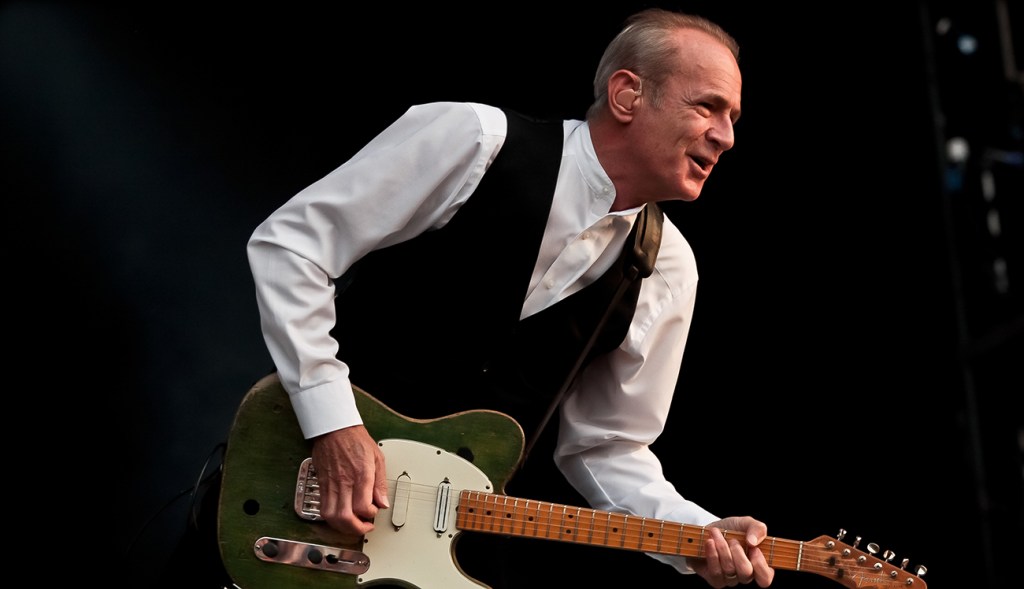
There are many similar examples of this. Graham Tomlin is Director of the Centre for Cultural Witness. This seeks to help the Church of England communicate the Christian faith through engagement with contemporary culture. Graham is a good friend and wrote the foreword to my 2020 book, Believing in Baptism. His silence in response to messages about Safeguarding the Institution, however, suggests his willingness to engage with culture excludes that of the church. As someone said to me, Graham’s approach to his role places him and the CCW in danger of becoming the Francis Rossi of the Church of England!*
Responses to the book have thus formed an effective litmus test of institutional commitment. Those harmed by the Church of England or genuinely perplexed by its constant safeguarding failures have responded to it with enthusiasm. Those invested in the institution have wanted to pretend that it doesn’t exist.
The ‘sexuality is the only issue that matters’ brigade
Another distinct strand of non-engagement with the book has come from those who appear to believe that sexuality is the only issue that matters within the Church of England. Or, more precisely, the only issue involving sex that they want discussed, for fear of it losing its pole position. Sometimes this is explicit. One conservative vicar exclaimed to me, with considerable frustration, that discussion of safeguarding in the Church of England should wait until the more important issue of the Church’s position on sexuality had been resolved.
Part of the non-engagement, however, stems from the complex relationship between these issues. Part of the book’s argument, particularly in Chapter 7, is that the Church of England’s current position on sexuality has had a devastating impact on its safeguarding. It argues that much of the Church’s leadership appears content with a situation in which conservatives, despite the introduction of blessings for same-sex relationships, still hold ‘the theory’ on homosexuality within the Church, while liberals hold ‘the practice’. The dishonesty inherent in this arrangement has, in turn, made meaningful accountability for the sexual behaviour of clergy – particularly those whose lives fall outside obvious heterosexuality – more or less impossible.
I make clear in the book that this situation could be used by both sides of the sexuality debate as an argument for the necessity of drastic change. Its central point is that the Church of England’s current ‘fudge’ on sexuality cannot be allowed to continue if it is to become a safe Church.
However, for the sake of openness, I am also clear that this argument has led me, after a long journey, to conclude that the Church of England must now fully accept same-sex marriage. In a book of 250 pages, however, my change of mind, and the reasons for it, are covered very briefly: just two and a half pages (pp. 225–227) towards the end of the book.
Despite this latter section being a minor aspect of the book, it has nevertheless caused a number of people to refuse to engage with any part of it. This includes the blogger Ian Paul, who has previously published articles I have written and interviews with me on his website Psephizo. While Ian and I have disagreed over the years, I have always admired his ability not to bear grudges and to treat issues separately. Knowing that my change of position on sexuality would disturb Ian, I nevertheless fully expected him to engage with the book: to agree with some parts, disagree with others, and use his considerable gifts for critical engagement to help advance discussion of the Church of England’s culture and its impact on safeguarding.
Sadly, it seems that for Ian and many others, holding the conservative line on sexuality matters more than confronting the Church of England’s failures on safeguarding and the task of creating a safe church.
Those unable to see past their tribalism
At a more fundamental level, part of the problem many people have with Safeguarding the Institution is that its critique of the Church of England is not tribal. Many are comfortable with criticism of the institution only when their own tribe can remain ‘the goodies’. The fact that the sexuality debate so readily lends itself, on both sides, to self-righteousness is one reason it remains so constant, acrimonious and seemingly intractable.
The issues surrounding safeguarding are quite different. They expose much of the current tribalism within the Church of England as remarkably superficial. Safeguarding the Institution makes clear that all the traditions of the Church of England bear responsibility for its catastrophic safeguarding failures – and for strikingly similar reasons. Perhaps the clearest evidence of this is the mixture of traditions represented in the most high-profile scandals.
Acknowledging such shared guilt would require a degree of humility that would inevitably have implications beyond safeguarding, including for the sexuality debate. Yet, in the current febrile and tribal atmosphere of the Church of England, too many are simply not prepared for anything of that kind to happen.
The challenge to engage with Safeguarding the Institution
The book does not claim to offer a definitive treatment of how the culture of the Church of England has shaped its approach to safeguarding. I am not an expert in either field; I am simply a vicar who did the right thing in relation to a safeguarding case within the church, was astonished by the reaction this provoked and was resolved to ask searching questions about what this revealed.
The book is intended as a conversation starter, not an attempt to have the final word. Survivors of abuse have engaged with it very fully, and it is now time for those invested in the Church of England – or their particular tribe within it – to do likewise.
* Francis Rossi is the lead singer of Status Quo
Discover more from Safeguarding the Institution
Subscribe to get the latest posts sent to your email.


